
Oct. 21, 2026

When Selling a Hawaii Property, Does the Seller Pay Conveyance Tax?

When Selling a Hawaii Property, Does the Seller Pay Conveyance Tax?

Selling a property in Hawaiʻi? One cost sellers should be aware of is the Hawaiʻi Real Property Conveyance Tax.

The Conveyance Tax is generally paid by the seller (transferor) when real property is transferred from one owner to another. The tax is based on the property’s conveyance consideration, which can include the sale price and certain other amounts associated with the transfer.

What Should Sellers Know?

· The seller generally pays the Conveyance Tax when the property is transferred.

· The amount depends on the property's conveyance consideration and applicable tax rate.

· Different rates may apply depending on factors such as the property's use, location, and whether the buyer will use it as a principal residence.

· Certain exemptions or special circumstances may apply, so the tax due can vary from one transaction to another.

· The Conveyance Tax is separate from other potential costs associated with selling a property, such as commissions, escrow fees, or closing expenses.

What Are the Current Hawaiʻi Conveyance Tax Rates?

For transactions under the general conveyance-tax schedule, the current rates are:

Property Value

Tax per $100

Less than $600,000

$0.10

$600,000–$999,999

$0.20

$1M–$1,999,999

$0.30

$2M–$3,999,999

$0.50

$4M–$5,999,999

$0.70

$6M–$9,999,999

$0.90

$10M or more

$1.00

Example: A $1 Million Sale

Suppose a property is sold for $1,000,000 and the transaction falls under the general rate schedule.


Applicable rate: $0.30 for every $100 of consideration

$1,000,000 ÷ $100 × $0.30 = $3,000 


The Hawaiʻi Conveyance Tax would therefore be $3,000 in this simplified example.

If the same $1 million sale were a condominium or single-family residence and the purchaser did not qualify for a county homeowner's exemption, the applicable rate would be $0.40 per $100, resulting in a conveyance tax of $4,000.

Understanding these costs before listing a property can help sellers have a clearer picture of their estimated net proceeds from a sale.

For current rates, exemptions, and requirements, sellers should consult the Hawaiʻi Department of Taxation or their real estate and closing professionals.

Rates shown are current as of October 2026 and are subject to change. This information is provided for general educational purposes. Sellers should consult their escrow professional, tax professional, or the Hawaiʻi Department of Taxation regarding their specific transaction.

Posted in Real Estate Facts
Oct. 14, 2026

How to File for a Hawaii Property Tax Exemption?

If you own and occupy a home as your primary residence on Hawaiʻi Island, you may qualify for Hawaiʻi County's Homeowner Exemption. Filing for this exemption can help reduce the taxable value of your property and potentially lower your annual property tax bill.

How to File

To apply for the Homeowner Exemption, homeowners generally need to:

  •  Confirm eligibility: Make sure you own and occupy the property as your principal residence and meet the County's requirements.
  •  Complete the application: Fill out the required Home Exemption application form.
  • Provide supporting documents: Submit any required documentation, which may include proof of ownership, residency, or other information requested by the County.
  • Submit by the applicable deadline: The filing deadlines for the homeowner application are June 30 and December 31. The date you file determines when the tax benefit begins:
    •  File January 1 through June 30: The tax benefit begins the following January 1.
    •  File July 1 through December 31: The tax benefit begins the following July 1.

Important to Know

The Homeowner Exemption is not automatically granted simply because you own a home. Eligible homeowners must complete the application process and meet the County's requirements. If you recently purchased a property or changed your primary residence, be sure to check whether you need to file a new application.

For current application forms, eligibility requirements, and deadlines, visit the County of Hawaiʻi Real Property Tax Office.

This article is for general informational purposes only and is not tax, legal, or financial advice. Requirements, exemption amounts, and deadlines may change. Please consult the County of Hawaiʻi Real Property Tax Office for the most current information regarding your specific situation.


Posted in Real Estate Facts
Oct. 6, 2026

What's Going on Around Big Island Hawaii - October 2026

2026 IRONMAN World Championship | October 10, 2026

On Saturday, October 10, 2026, the world will turn its attention to Kailua-Kona, Hawaiʻi, as the IRONMAN World Championship returns to its iconic home for a single-day race featuring both men and women. Starting at Kailua Pier, elite and qualifying athletes will take on the legendary IRONMAN challenge of a 2.4-mile swim, 112-mile bike, and 26.2-mile run, traveling from the Kona coast through Hawaiʻi’s dramatic volcanic landscape. For those who call the Big Island home or simply have the chance to visit, race week brings an incredible energy to Kona, with athletes, families, volunteers, and spectators filling the community. It is more than a world-class sporting event; it is a special time to experience the determination, beauty, and aloha that make IRONMAN Kona and the Big Island so unforgettable.

For local residents and visitors, please plan ahead for road closures, lane restrictions, and traffic delays throughout IRONMAN race week, October 5–10. While the main race takes place on Saturday, October 10, activities, course preparation, and other race-related events will take place throughout the week.

Learn More: IRONMAN World Championship – Kona, IRONMAN Kona Road Closures & Community Information.
___________________________________________________________________________

Hawaiʻi Food & Wine Festival – Cuisines of the Sun® Golf Classic | October 16, 2026

On Friday, October 16, 2026, the Hawaiʻi Food & Wine Festival brings its culinary spirit to the beautiful Kohala Coast for the Second Annual Cuisines of the Sun® Golf Classic, hosted by renowned chef Alan Wong at the Mauna Kea Golf Course. Registration begins at 10:00 AM, with a 11:30 AM shotgun start, followed by an awards reception and dinner at Number 3. More than just a day on the course, this unique experience brings together golf, Hawaiʻi’s local flavors, and the beauty of the island, with chef stations featuring fresh ingredients from Hawaiʻi Island’s culinary talents along the way. It’s a wonderful opportunity to slow down, enjoy the ocean breeze, savor something delicious, and experience the Big Island through food, community, and aloha.

Learn More:
 Hawaiʻi Food & Wine Festival – Cuisines of the Sun® Golf Classic


Posted in Community News
Oct. 2, 2026

Real Estate Market - September 2026

Residential Market More Steady Than Condo

 
Below, you can see the North Kona Median Price and Sold Qty changes, month to month, for the last two years. The Red line represents the Median Price, and the Blue line represents the Sold Qty. The ups-and-downs of the Sold Qty indicates the market is sensitive and unstable.

Below data comes from Hawaii Information Service.
 
 
Here is an overview of the August 2026 data and YTD compared to 2025 . The data indicates August had good result in Residential Sold Qty, while Condo Sold Qty declined. 

North Kona Median Price Changes over the last 22 years

Please note that for first time in the last 14 years, the median price decreased in 2025 from the previous year.


Posted in Real Estate News
Sept. 29, 2026

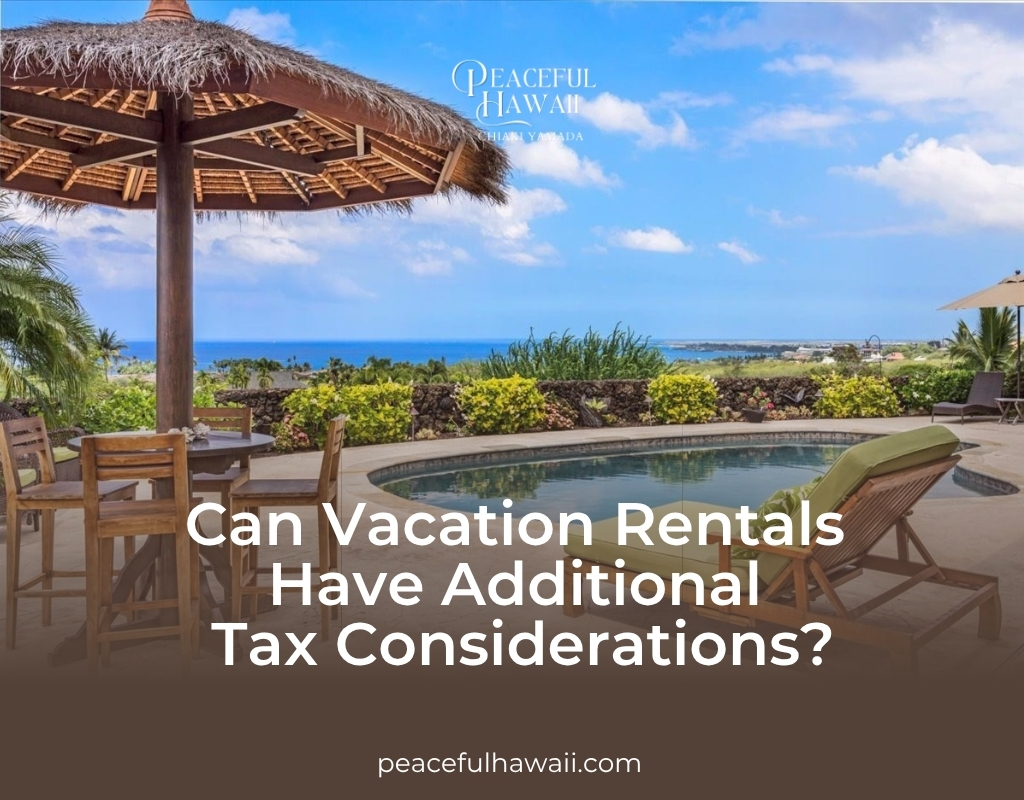
Can Vacation Rentals Have Additional Tax Considerations?

Thinking about renting out a home or condominium as a vacation rental? In Hawaiʻi, short-term rental income can come with additional tax responsibilities that property owners should understand before getting started.

Hawaiʻi generally treats rentals of less than 180 consecutive days as transient accommodations. Rental income from Hawaiʻi real property is subject to Hawaiʻi income tax and General Excise Tax (GET), and when the property is operated as a transient accommodation, Transient Accommodations Tax (TAT) also applies.

What Should Vacation Rental Owners Know?

  • Rental income is taxable. Income received from renting Hawaiʻi real property must be reported on the appropriate Hawaiʻi income tax return. This applies to both long-term and short-term rental activity.

  • General Excise Tax (GET) applies. Hawaiʻi's State GET rate is 4%. For properties located on the Big Island, Hawaiʻi County currently imposes an additional 0.5% county surcharge, resulting in a combined GET tax rate of 4.5%. If the tax is visibly passed on to the renter, the maximum pass-on rate in Hawaiʻi County is currently 4.712%.

  • Transient Accommodations Tax (TAT) applies to short-term rentals. Hawaiʻi's State TAT is currently 10.25% on taxable gross rental proceeds for transient accommodations. In addition, Hawaiʻi County imposes its own 3% Hawaiʻi County Transient Accommodations Tax (HCTAT). This means qualifying Big Island transient accommodations may be subject to both the 10.25% State TAT and 3% County TAT.

  • GET and TAT are separate taxes. Vacation rental owners should be aware that GET and TAT have different requirements and should not be treated as a single tax. Depending on the rental activity, both may apply in addition to Hawaiʻi income tax.

  • Registration and tax filings are required. Operators of short-term rentals generally must register for GET and TAT licenses with the Hawaiʻi Department of Taxation and file the required periodic and annual tax returns.

  • County regulations also matter. Taxes are only one part of operating a vacation rental. Hawaiʻi County has its own rules governing short-term vacation rentals, and zoning, registration, permitting, and other operational requirements may apply depending on the property and its location.

Current Big Island Vacation Rental Tax Rates

As of October 2026, the key rates include:

State GET: 4%
Hawaiʻi County GET Surcharge: 0.5%
State TAT: 10.25%
Hawaiʻi County TAT (HCTAT): 3%

Tax rates and regulations are subject to change. Property owners should verify current requirements with the Hawaiʻi Department of Taxation, Hawaiʻi County, and a qualified tax professional.

If you're considering purchasing a property as a vacation rental, understanding the tax and regulatory requirements before you buy can help you more accurately estimate the property's potential expenses, responsibilities, and overall investment.

For more information:
Hawaiʻi Department of Taxation – Renting Residential Real Property

This article is for general informational purposes only and is not tax, legal, or financial advice. Tax obligations and short-term rental regulations can vary depending on the property and how it is used. Please consult the Hawaiʻi Department of Taxation and the applicable county authorities for current requirements.

Posted in Real Estate Facts
Sept. 28, 2026

What's Going on Around Big Island - September 2026

Aloha! This is Chiaki Yamada with KW Big Island. As the Autumn Equinox arrives, I hope you'll enjoy the beauty of the season and the vibrant colors that make this time of year so special.

The Hawaii real estate market is slowing as offshore buyers decrease while local buyers remain active, particularly in the single-family home market for properties priced under $1.5 million. 

Exceptional luxury properties and well-priced homes are still finding buyers quickly, even in this market. This suggests many buyers are still waiting for the right property.

The good news is that single-family home inventory is not overwhelming, which helps prevent significant price drops.

However, challenges remain for second homes or luxury properties priced above $2 million, as well as with increased condo inventory.

For buyers, this is an advantageous time to negotiate prices and terms. It's important to stay alert, as multiple-offer situations are still a reality.

While interest rates have increased slightly, I can introduce you to lenders who can strategize your loan options, including buying down points or exploring creative qualification processes for new loan products. Now is a good time to be creative in securing the best loan services available.


Kona Residential Market Overview (as of September 21, 2026)

Here’s a snapshot of the Kona residential market, highlighting key insights:
  • Active Listings: Increased by 6 % from last year September, which is not overwhelming
  • Inventory Level : 4.2 Months
  • Pending Ratio: Decreased by 19 % from last year September, Price range more than $2M showing slow down
  • Average Days on Market: Properties are currently taking an average of 124 days on the market, which slightly decreased from last month 

Please keep in mind that market conditions can vary significantly by price range, and it may take longer to find buyers in certain segments

Kona Condo Market Overview (as of September 19, 2026)

While the inventory remains high and the market is slow, however there has been an increase condos going under contract this month!

Here’s a snapshot of the Kona residential market, including key insights:

Active Listings: Increased by 29% from 2025 September, which is significant inventory increase.
Inventory Level : 11.9 months !

Pending Ratio: Ratio is low due to high inventory, but the number is similar to last year Septebmer
Average Days on Market: Currently, properties are taking an average of 119 days

For those considering an investment in the Kona condo market, this may be an opportune time to explore potential deals, as increased activity could lead to favorable opportunities.

I am here to provide you with a detailed market analysis for your neighborhood. If you or anyone you know may be thinking of buying, selling or both, I would be happy to be of service!


Posted in My News
Sept. 22, 2026

Could Your Primary Home Qualify for a Hawaii Property Tax Break?

If your home on Hawaiʻi Island is your primary residence, you may qualify for Hawaiʻi County’s Homeowner Exemption. The exemption reduces the taxable value of your property, which may help lower your annual property tax bill.

You may qualify for the Homeowner Exemption if you:

  • Own and occupy the property as your principal home for more than 200 days of the calendar year.
  • Have your ownership recorded with the Bureau of Conveyances or Land Court by the required deadline. Certain long-term recorded lessees may also qualify.
  • Do not claim a homeowner or homestead exemption on another property in Hawaiʻi or elsewhere.
  • File a Hawaiʻi Resident Income Tax Return (N-11) within the required period, or qualify for an applicable waiver.
  • Submit the Home Exemption application (RP Form 19-71) with the required documentation by the applicable deadline.
  • Additional Exemption: Meet the age requirements for an increased exemption, if applicable. The exemption amount increases for qualifying homeowners who reach certain age brackets, beginning at age 60. Age is determined as of January 1, and proof of age must be provided with the application.

If you recently purchased a home or made a property your primary residence, it may be worth checking whether you qualify. Taking advantage of an exemption you are eligible for could help reduce your property tax expenses year after year.

For current requirements, deadlines, and application information, visit the County of Hawaiʻi Real Property Tax Office.

This article is for general informational purposes only and is not tax, legal, or financial advice. Requirements, exemption amounts, and deadlines may change. Please consult the County of Hawaiʻi Real Property Tax Office for the most current information regarding your situation.

Posted in Real Estate Facts
Aug. 18, 2026

Knowing the Land We Live On

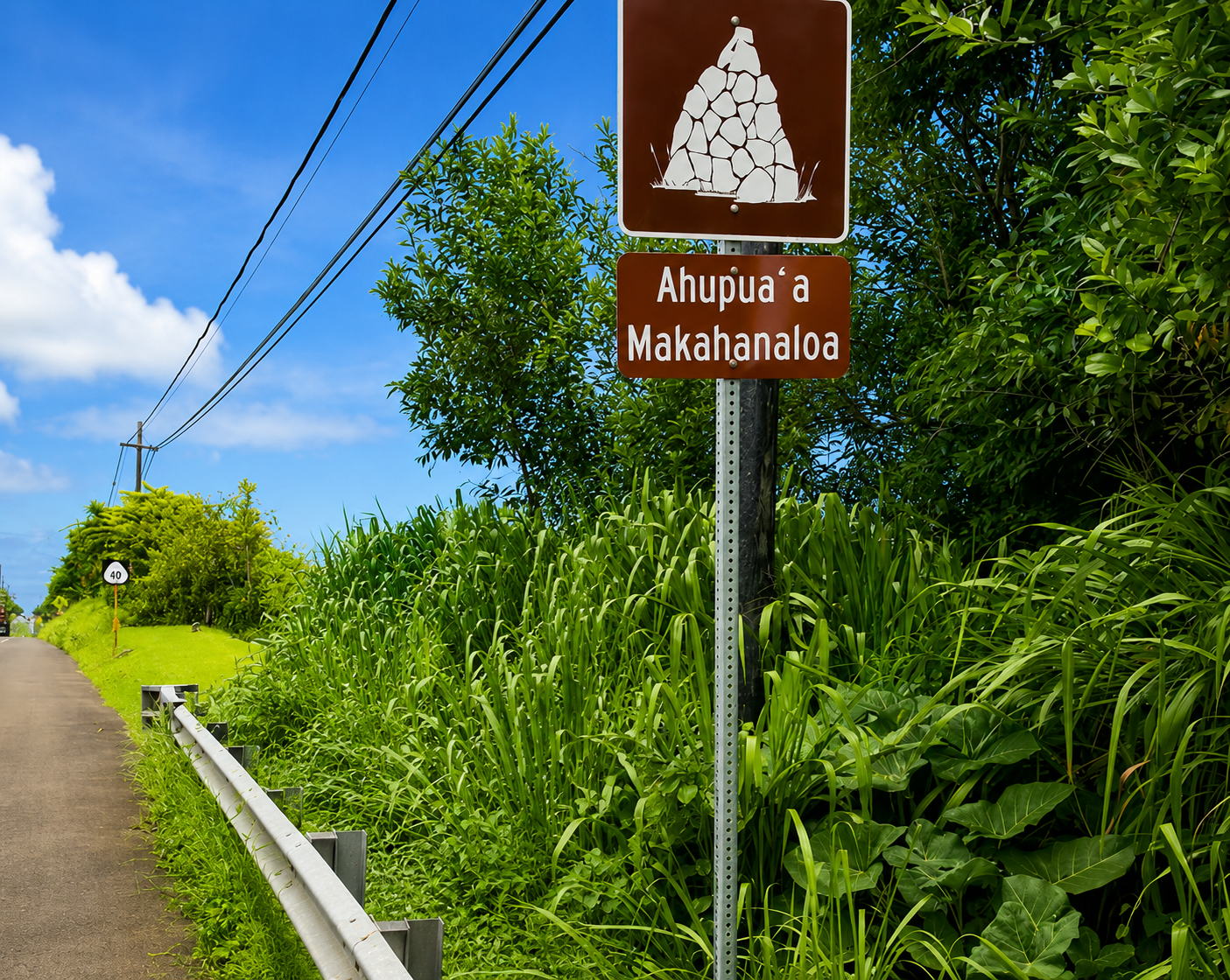
When driving around Hawaiʻi Island, it’s easy to focus on where we’re headed, Kona, Kohala, Hilo, or somewhere in between. But the names and boundaries of the places we pass through often carry stories that go back generations.

A local community effort to install signs identifying ahupuaʻa is hoping to make those connections a little more visible.

An ahupuaʻa is a traditional land division that generally extended from the upland areas toward the sea, connecting different parts of the landscape and the resources within them. These areas were not simply lines on a map. They reflected relationships between people, land, water, and the ocean.

For longtime residents, these names may already be familiar. For others, including newer residents and visitors, seeing an ahupuaʻa name on a roadside sign could offer a simple reminder that the communities we know today have much deeper histories.

That is what makes this effort interesting. A sign may seem like a small thing, but it can encourage people to pause and learn more about the place they are in.

Here on Hawaiʻi Island, where communities can feel very different from one district to the next, understanding the land and its history can add another layer to our sense of place. It can help connect present-day neighborhoods, farms, businesses, schools, and homes with the larger story of the island.

There is also something positive about making local history part of everyday life rather than keeping it only in books or museums. A simple sign along the road can become a starting point for a conversation with a child, a neighbor, or someone new to the island.

As Hawaiʻi continues to grow, efforts like this offer a thoughtful way to keep local identity visible. Growth and change are part of island life, but so is remembering the places, names, and connections that came before us.

Sometimes, learning more about where we live begins with something as simple as knowing the name of the land beneath our feet.

Source: Inspired by reporting from the Hawaiʻi Tribune-Herald, August 2026.

Posted in Community News
Aug. 7, 2026

What's Going on Around Big Island - August 2026

Puʻukoholā Heiau National Historic Site Establishment Day | August 15-16, 2026

Some places tell a story, Puʻukoholā Heiau lets you feel it. During the annual Hoʻokuʻikahi Establishment Day Hawaiian Cultural Festival, this sacred site comes alive as the legacy of King Kamehameha I is honored through traditional hula, heartfelt chanting, Hawaiian cultural demonstrations, canoe displays, hands-on educational exhibits, and the sharing of traditions that have been passed down for generations. While the detailed schedule will be announced closer to the event, the celebration traditionally begins with an early morning hoʻokupu (offering ceremony) and continues throughout the day. As the sounds of ancient chants echo across the historic temple, visitors are invited to experience the spirit of aloha and connect with the rich cultural heritage that continues to shape Hawaiʻi. It's more than a festival, it's an unforgettable journey into the heart of the islands.

Learn More: Puʻukoholā Heiau National Historic Site

------------------------------------------------------------------------------------------------------------------

Hawaiʻi Volcanoes National Park Fee-Free Day | August 25, 2026

There are few places in the world where you can witness the Earth creating itself and Hawaiʻi Volcanoes National Park is one of them. On Tuesday, August 25, celebrate the 110th Anniversary of the National Park Service with free park admission and a full day of discovery. Beginning around 10:00 AM, visitors can enjoy special ranger-led programs and guided experiences, while scenic trails, dramatic volcanic landscapes, and breathtaking viewpoints invite exploration at every turn. Whether you're standing in awe of Kīlauea's ever-changing landscape or simply taking in the quiet beauty of the park, it's a day that reminds us how powerful nature can be, and how fortunate we are to experience it here on Hawaiʻi Island.

Learn More: KonaWeb Big Island Events Calendar | Park Fee-Free Days Information


Big Island Quiz !

If you can name these places, you are a true Big Island lover....
Left :  Hiilawe Fall in Waipio Valley
Right : Pu'uhonua o Honaunau National Historical Park
Posted in Community News
Aug. 6, 2026

My Listing and Real Estate Market June 2026

 
MLS 726197

Mixed-use: Two Warehouse Buildings 
in the Heart of Waimea


64-1015 Mamalahoa Highway, Kamuela, HI 96743

Land 28,426 sq.ft,   Interior 14,935 sq.ft


Zoned Neighborhood Commercial 7.5

Offered for $6,999,000
This fee simple Waimea commercial property offers two fully occupied warehouse buildings with a versatile mix of storage/garage, retail, and residential uses.

Building 1 is a warehouse structure featuring three individual storage/garage bays totaling approximately 5,000 square feet (about 1,666 square feet each), along with three one-bedroom, one-bath residential units totaling roughly 2,500 square feet.

Building 2 includes two large warehouse bays totaling approximately 4,485 square feet, one with a mezzanine currently used as an office. Adjacent to the warehouse is a retail space of 1,450 square feet. Above the retail space, the second floor offers two one-bedroom, one-bath residential units with a laundry room totaling 1,450 square feet.
More Photos and Info
Mixed-use: Warehouse Buildings in the Heart of Waimea
 

Residential Market More Steady Than Condo

 
Below, you can see the North Kona Median Price and Sold Qty changes, month to month, for the last two years. The Red line represents the Median Price, and the Blue line represents the Sold Qty. The ups-and-downs of the Sold Qty indicates the market is sensitive and unstable.

Below data comes from Hawaii Information Service.
 
 
Here is an overview of the June 2026 data and 1st half compared to 2025 June and 1st half. The data indicates a downward trend in both median price and the number of properties sold. Notably, this year, more affordable properties are selling compared to those at higher price points which decrease the median price.

North Kona Median Price Changes over the last 22 years

Please note that for first time in the last 14 years, the median price decreased in 2025 from the previous year.
Posted in Real Estate News